(Contract Drafting Service)
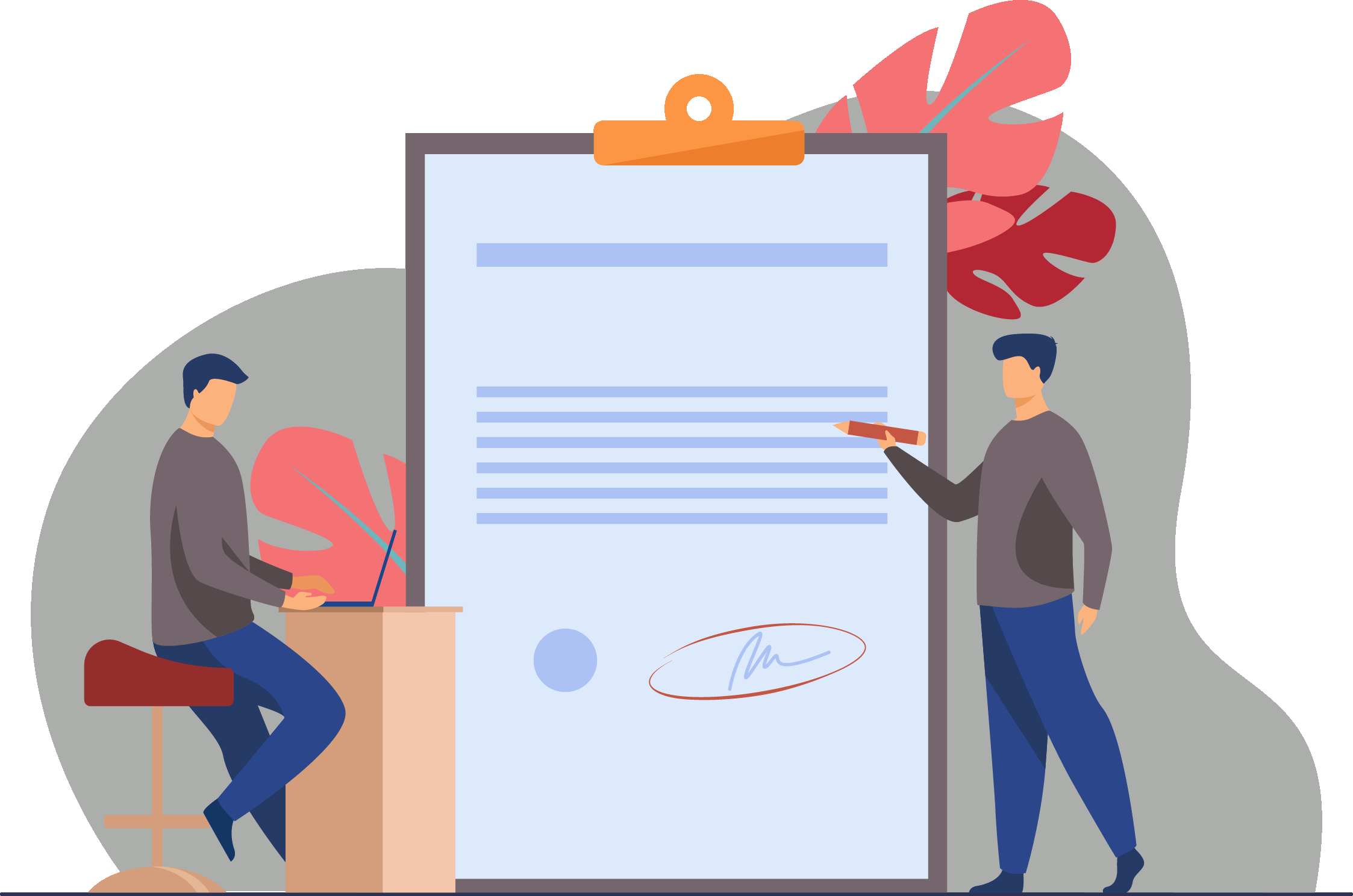
We are a team of experienced lawyers and paralegals who can help you create clear, concise and legally sound contracts for any purpose.
Whether you need a contract for a business deal, a personal agreement, a lease, a will or anything else, we can draft it for you in no time.
You can choose from our templates or customize your own contract according to your needs and preferences. We also offer editing and reviewing services to make sure your contract is error-free and compliant with the relevant laws and regulations. Contact us today and get a free quote for your contract drafting project.
You won't regret choosing Drafty as your contract drafting partner!
Most business relationships start with a handshake, a phone call or a quick exchange of messages. That works well while everyone agrees. The trouble begins when expectations drift apart: a payment is delayed, a deliverable is disputed, a co-founder leaves, or a client claims ownership of work you thought was yours. At that point, the only thing that really matters is what was written down and signed.
A contract is simply a written record of what each party has promised to do, what happens if they do not, and how disagreements will be resolved. A clear contract reduces ambiguity, sets expectations early and gives both sides something concrete to point to if a dispute arises. For a small business or startup, where a single dispute can consume a great deal of time and money, that clarity is especially valuable.
The exact documents a business needs depend on its industry, structure and stage. That said, some agreements come up again and again for Indian startups and small businesses:
Used before sharing business plans, product ideas, source code, client lists or other confidential information with potential partners, investors, vendors or employees. A good NDA defines what counts as confidential, how long the obligation lasts and what the receiving party may and may not do with the information.
When two or more people start a business together, they should agree in writing on ownership, roles, decision-making, vesting of equity, and what happens if a founder exits. These conversations are much easier to have at the beginning than in the middle of a disagreement.
These set out the scope of work, deliverables, payment terms, quality standards, timelines agreed between the parties, liability and termination rights. They protect you whether you are the one buying services or the one providing them.
Offer letters and employment contracts cover compensation, duties, notice periods, confidentiality and, importantly, ownership of work created during employment. Freelancer and consultant agreements need similar clarity, particularly around who owns the intellectual property they produce.
Any business with a website or app interacts with users under some set of rules. Terms of use explain how the platform may be used and limit the business's liability, while a privacy policy explains what personal data is collected and how it is handled. Both should reflect how your platform actually works, not a template copied from a different business.
Office or shop leases, IP licences, and personal documents such as wills also benefit from careful drafting, because small wording choices can have large consequences years later.
Free templates are easy to find online, and they can be a reasonable starting point for understanding what a document usually contains. The problem is that a template is written for nobody in particular. It does not know your business model, your risk tolerance, the specific deal you are making, or the laws that apply to your situation. Some templates are drafted for other countries and refer to legal concepts that do not fit Indian law at all.
A professionally drafted contract starts from your facts. It asks questions a template never will: What exactly are you delivering? What happens if the other party pays late? Who owns what is created? Which city's courts, or which arbitration process, will resolve disputes? What are you actually worried about in this relationship? The answers shape clauses that fit the deal instead of generic language that may or may not apply.
Just as importantly, a drafted contract is internally consistent. Templates stitched together from several sources often contain definitions that do not match, clauses that contradict each other, or obligations that nobody notices until they become a problem.
Many contract disputes trace back to a handful of avoidable mistakes:
To illustrate, imagine a hypothetical early-stage D2C brand that hires a freelance designer to create its logo and packaging using a short email exchange. Two years later the brand has grown, and the designer claims the artwork was only licensed, not transferred. With no written assignment clause, the brand is left negotiating from a weak position over its own identity. A one-page, well-drafted agreement at the start could have settled that question for good.
Good contracts do more than help in court. They make everyday business smoother. They give your team a reference point for what has been agreed, help you have difficult conversations about money and responsibility early, and make your business look organised and trustworthy to clients, partners and investors. When investors or acquirers look at a company, the quality of its key agreements is often part of what they review.
Drafty is built around that idea. Whether you need a new agreement drafted from scratch, a template customised to your situation, or an existing contract reviewed and edited before you sign, our team works to make sure the document is clear, consistent and aligned with the relevant laws. If your contract touches on brand, creative work or inventions, we can also point you to related services such as patent and design registration, or you can explore our legal guides to learn more.
Have a contract in mind, or one sitting in your inbox waiting to be signed? Schedule a free call or message us on WhatsApp, and tell us what you need.
